Okay, I know it’s late and I’m supposed to be sleeping rn, but I found an interesting term in one of the comments. “Avoidant attachment.”
I looked it up.
I’ve always wondered why I attract the neediest and clingiest persons. Don’t get me wrong, I’m not hey-leave-me-alone, i-don’t-need-anybody, i’m-strong-independent, etc.
They’re always the nicest and warmest people I knew. They would throw their things and run to me whenever I needed them. But sometimes, the affection was just too much I couldn’t take it. I felt like suffocated that I had to move away from them. I’ve always thought I was being mean, they basically marked me as their life (a bit like worshipping) but I despised what they did?
I hated it when they made me like their world. Okay, whatever you called it, love, affection. It was not IT for me.
Hey, don’t you have other things in your life?
And out of all, why did I have to end up with attaching people? Could you at least give me a less-dependent person?
Until I read the article
I copied all the text from the website.
If you are avoidant, you probably cannot figure out why you keep attracting anxious people who demand so much of you emotionally and always seem to want more than you can (or want) to give.
This first diagram depicts an anxious and avoidant person on a first date.
At first, when they come together, both people bring an equal amount of energy onto the field. After all, they don’t know each other yet (or what the other person’s attachment style is!).

The avoidant person will be confident and self-assured. They will be complimentary, and might be thinking about how to make the other person feel positive about the interaction. The anxious person will want to know that the avoidant person finds them interesting and desirable.
Now the anxious person naturally is excited and may take up a little more than their share of the conversational turn and use more words. Instead of talking about themselves or working as hard to drive the conversation, the avoidant person may show interest by asking questions. The anxious person is likely to enjoy this attention and feel energized and talk more. To this, the avoidant person may smile, nod, laugh and give some refrains … but in reality, say less and less. The anxious person doesn’t notice and thinks, “Hey this person seems to really like me and be into what I am saying. I’ll keep this up. This is going well.”
But, neither person notices that the avoidant person has actually pulled some personal energy out of the interaction. Because the energy in the shared space needs to be in balance, the anxious person compensates by putting in more resources into the shared space.
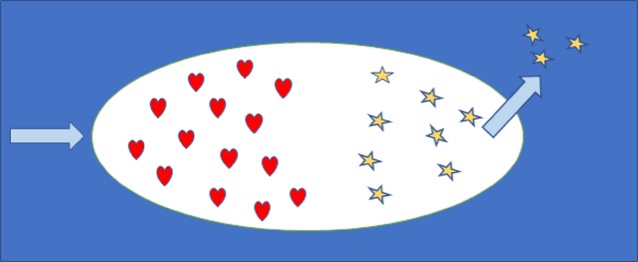
Gradually, however, the anxious person’s emotional system will start to pick up cues that something is wrong; That the avoidant person might not be fully into the relationship. And they would be correct. It isn’t that the avoidant person no longer cares, but the displaced resources from the avoidant person don’t just evaporate. They leave the shared relationship space, but they have to go somewhere. So, they get redirected.
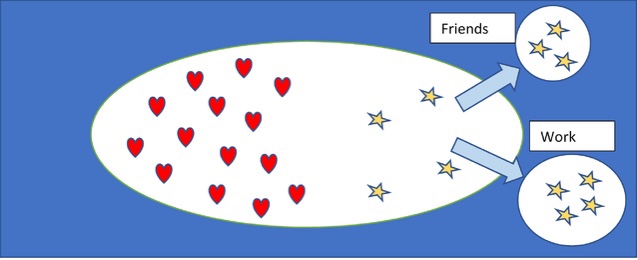
Now the anxious person may start to apply some pressure to get the avoidant person to bring energy back into the shared space. But this pressure could change some of the warm energy to negative energy. But it doesn’t take any anxious energy out of the field and may actually increase it. Remember, the only way for the avoidant person to come back into the field will be for the anxious person to withdraw some emotional energy out of the space.

But this is the hard part and where things often go very wrong. As the anxious person withdraws some energy out of the system, wanting the avoidant person to bring their energy back into the space, there will be a time lag. The avoidant person may not immediately sense the energy shift and know it is time to come back in (and may be afraid to if the energy has become too negative). They may stand with their energy still on the sideline not knowing what to do.
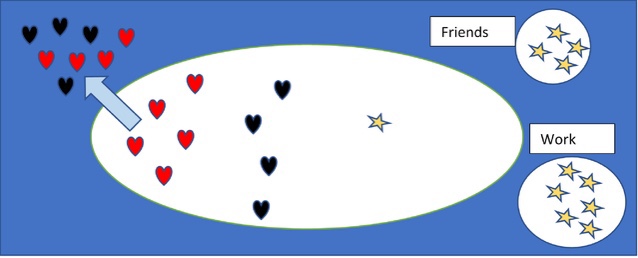
For a time, the system will be out of balance (in disequilibrium). During this phase, the anxious person is likely to feel highly anxious, scared and dysregulated. They may start throwing energy into the space and withdrawing energy out of the space rapidly and in a haphazard manner (which will look crazy to the avoidant person who is just sitting there not moving their energy).
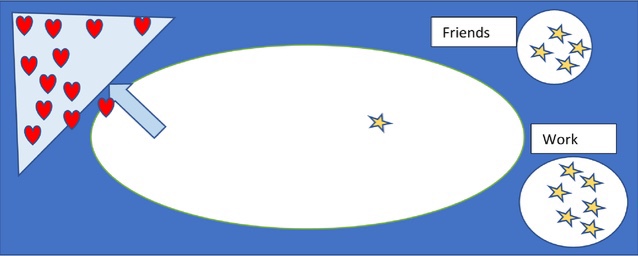
If the anxious person comes back into the space too hard, they may knock the avoidant person right out of the ring. If they pull too much energy out of the space, they may make a foolish decision and try to put it into another space that was not well-chosen (like running into someone else’s arms and cheating). If at this moment the avoidant person completely withdraws from the space, there will be no space for the anxious person to come back into when they realize that they have made a mistake.
Okay so now I get it ugh I’m v sleepy and I don’t know what to do with this information. It’s almost 3 A.M. geez
 0cheeri0.code.blog